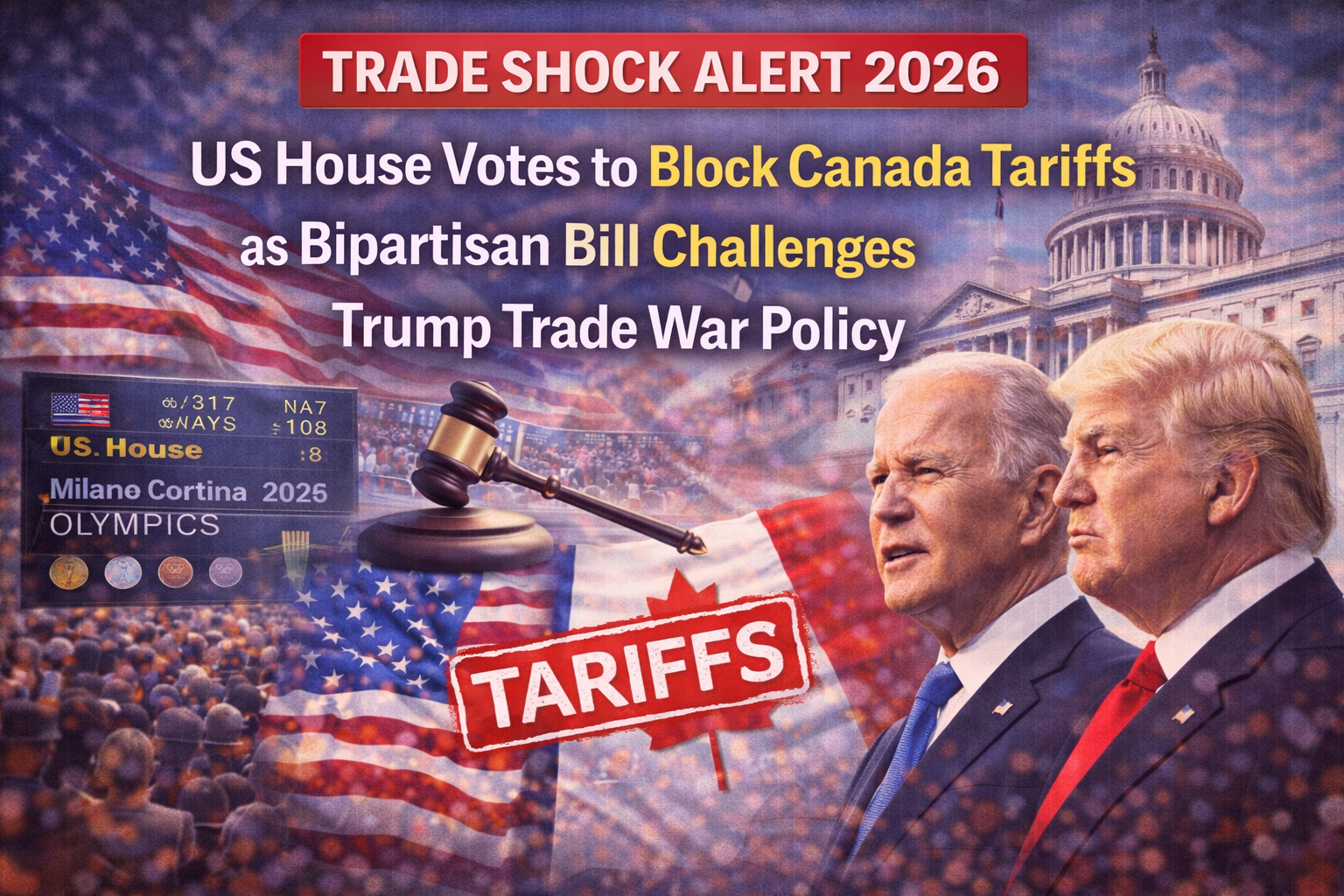
In a major political and economic development in 2026 the United States House of Representatives voted to block newly proposed tariffs on Canadian imports marking a significant bipartisan push against escalating trade tensions. The vote reflects growing concern among lawmakers that expanding tariff policies could harm American businesses disrupt supply chains and strain one of the United States most important economic partnerships. The decision represents one of the most direct congressional challenges to executive trade authority in recent years.
This article explains why the House moved to block the tariffs what the bipartisan bill includes how it affects US Canada trade relations and what it means for the future of American trade policy. Readers will understand the political motivations economic risks legislative process and potential consequences of this high stakes trade conflict in 2026.
Key Highlights
Key Point Details
- Main Action: US House passed bill to block Canada tariffs
- Policy Conflict: Congressional challenge to executive trade authority
- Economic Concern: Risk of supply chain disruption and higher costs
- Political Support: Bipartisan backing from both parties
- Trade Impact: Potential reset of US Canada economic relations
Why the US House Moved to Block Canada Tariffs
Lawmakers voted to block the tariffs due to widespread concern that new trade restrictions on Canadian imports could negatively impact the US economy. Canada remains one of the largest trading partners of the United States and tariffs could raise costs for industries dependent on cross border supply chains including manufacturing energy and agriculture.
Many representatives argued that the tariffs risked triggering retaliatory measures from Canada which could harm American exports. The bipartisan support for the bill reflects shared economic priorities rather than political alignment showing how trade policies often influence both parties when domestic industries are at stake.
What the Bipartisan Bill Includes
The bipartisan legislation aims to limit the executive branch ability to impose new tariffs on Canadian goods without congressional approval. The bill establishes stronger oversight mechanisms requiring detailed economic impact assessments before any future trade restrictions can be implemented.
Additionally the bill emphasizes maintaining stable trade relations with key allies particularly those involved in integrated supply chains. Lawmakers designed the measure to ensure transparency accountability and economic stability while still preserving national security related trade authorities.
How the Vote Challenges Presidential Trade Authority
The House vote represents a rare example of Congress directly challenging presidential trade powers. Traditionally the executive branch holds significant authority to impose tariffs under national security and trade law provisions. However lawmakers increasingly seek to reassert congressional oversight over major trade decisions.
This legislative action reflects broader debates about the balance of power between Congress and the executive branch in shaping trade policy. If enacted the bill could set a precedent for future congressional involvement in tariff decisions affecting key international partnerships.
Economic Implications for US Canada Trade Relations
Blocking the tariffs could help preserve stable economic relations between the United States and Canada. The two nations share one of the largest bilateral trade relationships in the world supporting millions of jobs across multiple industries.
Maintaining tariff free trade helps protect supply chain efficiency reduces costs for businesses and ensures competitive pricing for consumers. The House vote signals a commitment to economic cooperation and may prevent potential retaliatory trade measures from Canada.
Political Reactions Across Washington
The vote received strong bipartisan support with lawmakers from both parties emphasizing the importance of economic stability and alliance relationships. Supporters described the bill as necessary to protect American workers and businesses from unintended consequences of trade conflicts.
Opponents argued that limiting executive trade authority could weaken the presidents ability to respond quickly to unfair trade practices. This debate highlights ongoing tensions between economic policy priorities and national security considerations.
How This Decision Could Shape Future Trade Policy
The House action could influence future trade policy by strengthening congressional oversight over tariff decisions. Lawmakers may pursue additional reforms to ensure greater transparency in trade negotiations and economic impact evaluations.
If similar legislation becomes law it could reshape how trade disputes are handled in the future emphasizing collaboration between the executive branch and Congress. This shift may lead to more balanced and predictable trade strategies.
Conclusion
The US House vote to block Canada tariffs in 2026 marks a significant turning point in American trade policy. The bipartisan effort reflects widespread concern about economic risks and the importance of maintaining strong trade partnerships with key allies.
As the legislative process continues the outcome could redefine the balance of trade authority between Congress and the executive branch while shaping the future direction of US international economic relations.
FAQs
Why did the US House vote to block Canada tariffs?
Lawmakers acted to prevent economic disruption protect supply chains and maintain strong trade relations with Canada.
What does the bipartisan bill aim to achieve?
The bill seeks to increase congressional oversight and require economic analysis before imposing new tariffs on Canadian goods.
How could tariffs affect US businesses?
Tariffs could increase production costs disrupt supply chains and lead to higher consumer prices.
Does the vote immediately stop all tariffs?
The bill must still pass additional legislative steps before becoming law but it signals strong congressional opposition.
What is the long term impact of this decision?
The vote could reshape trade policy by strengthening congressional involvement in future tariff decisions.