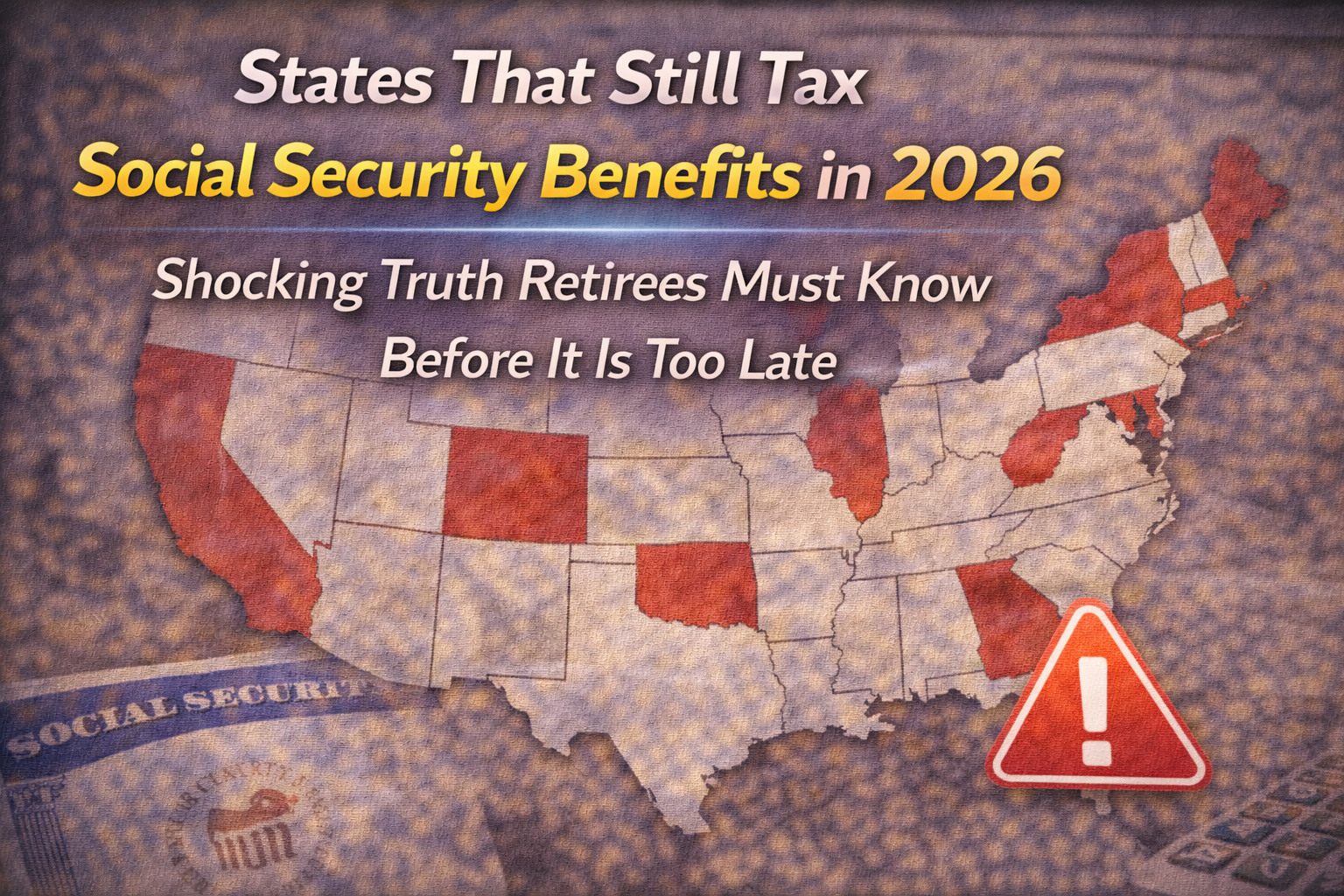
Social Security benefits play a critical role in retirement planning for millions of Americans. For many seniors these monthly payments are not extra income but the backbone of their financial survival. While federal law determines how Social Security is taxed at the national level many retirees are shocked to learn that state governments can apply their own tax rules. In 2026 this issue becomes even more important as inflation pressure healthcare costs and housing expenses continue to rise across the United States
What makes this topic especially confusing is the widespread belief that Social Security income is completely tax free after retirement. This assumption leads many retirees to underestimate their future tax burden. The reality is more complicated. Although most states do not tax Social Security benefits a small group of states still do. Understanding which states fall into this category and how those taxes work is essential for protecting retirement income and avoiding unpleasant surprises during tax season.
Why Some States Still Tax Social Security Benefits
The decision to tax Social Security benefits at the state level often comes down to budget structure and revenue dependence. States that rely heavily on income tax revenue are less likely to fully exempt Social Security income. In many cases lawmakers argue that taxing higher income retirees helps fund essential public services such as healthcare transportation and education
Another reason is historical policy inertia. Some states implemented Social Security taxation decades ago and have been slow to repeal it. Even when public support favors exemption budget constraints often delay reform. While several states have passed partial relief measures complete elimination remains politically complex. This is why retirees must not assume that federal changes automatically apply at the state level.
How Much Retirees Can Lose Due to State Taxes
The financial impact of state taxation on Social Security benefits can be more serious than many retirees expect. Depending on income level and state rules annual tax costs can range from a few hundred dollars to several thousand dollars. Over a twenty year retirement this can quietly drain tens of thousands of dollars from fixed income households
This loss is particularly damaging for retirees who rely primarily on Social Security rather than pensions or investment income. State taxes can also push retirees into higher federal tax brackets by increasing adjusted gross income. This chain reaction can affect Medicare premiums and other benefit calculations creating a compounding financial burden.
How to Reduce or Avoid Social Security Taxes Legally
One effective strategy is income planning. Many states base Social Security taxation on total income levels. By managing withdrawals from retirement accounts retirees may stay below taxable thresholds. Timing income sources correctly can significantly reduce or even eliminate state taxes
Another approach is relocation planning. Some retirees choose to move to states that fully exempt Social Security benefits. While relocation is not feasible for everyone even part time residency strategies can help in certain cases. Consulting a tax professional before making major decisions is essential because each state applies residency rules differently.
Future Outlook for Social Security Taxes Beyond 2026
Looking ahead several states are actively debating further tax relief for retirees. Political pressure continues to grow as the retiree population expands and cost of living concerns intensify. However progress remains uneven and depends heavily on economic conditions and state budget health
Retirees should not rely on future promises when planning finances. Even states that announce phased exemptions may take years to fully eliminate taxes. Staying informed and reviewing tax rules annually remains the safest strategy in an uncertain policy environment.
Frequently Asked Questions
Which states tax Social Security benefits in 2026?
Colorado Minnesota Montana New Mexico and Utah apply some form of taxation
Do all retirees pay Social Security tax in these states?
No most states use income thresholds or credits that exempt lower income retirees
Is Social Security taxed twice?
It can be taxed federally and at the state level depending on income and location
Can moving states reduce Social Security taxes?
Yes many states fully exempt Social Security income
Will more states eliminate Social Security tax in the future?
Possibly but changes depend on state budgets and legislation