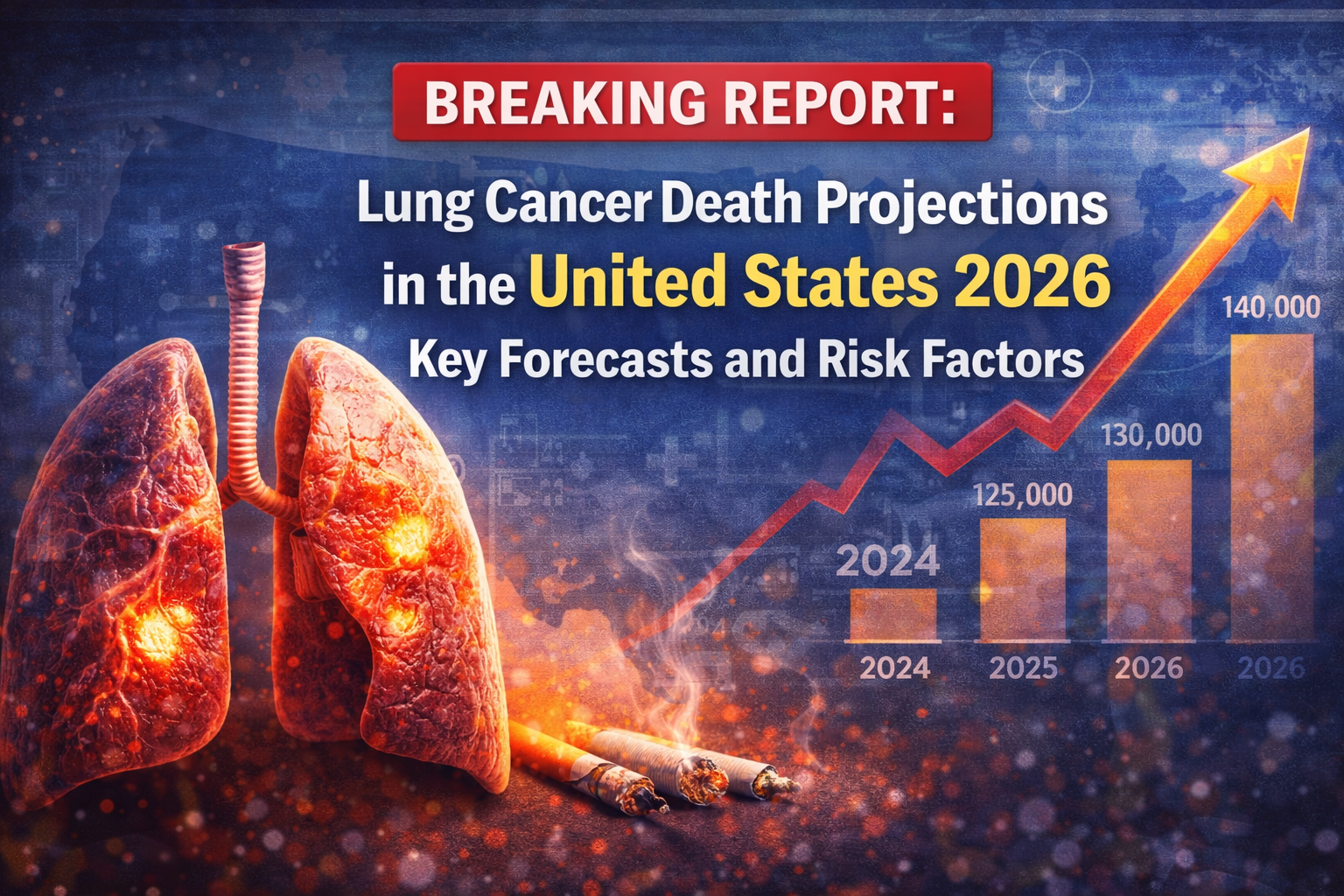
Lung cancer remains the leading cause of cancer deaths in the United States in 2026, even as overall cancer mortality continues to decline thanks to improvements in prevention, screening, and treatment. According to the most recent American Cancer Society statistics, lung cancer is expected to cause about 124,990 deaths in the U.S. in 2026, accounting for nearly one in five cancer deaths nationwide.
Despite decades of progress in tobacco control, early detection, and advanced therapies, lung cancer continues to impose a heavy toll due to late-stage diagnoses and persistent exposure to major risk factors. Today’s projections consider a combination of population aging, smoking prevalence trends, environmental exposures, and treatment breakthroughs that will shape the burden of lung cancer deaths this year. This article breaks down the key forecasts, emerging patterns, primary risk contributors, and evolving prevention strategies that define the U.S. lung cancer landscape in 2026.
Key Forecasts for Lung Cancer in the U.S. 2026
Expected Deaths and Incidence
• Lung cancer is projected to cause roughly 124,990 deaths in 2026, making it the top cause of cancer mortality in the United States this year.
• At the same time, about 229,410 new lung cancer cases are expected to be diagnosed in 2026.
• Although lung cancer death rates have been declining over the past decades, the absolute number of deaths remains high due to demographic trends such as population growth and aging.
Trends in Death Rates
• Age-adjusted lung cancer mortality is projected to continue a gradual decline, reflecting decades of reductions in smoking and earlier detection.
• For localized lung cancers detected early, five-year survival rates have improved significantly, but late-stage diagnoses still drive the majority of deaths.
Stage and Survival Projections
• Survival varies drastically by stage: patients with localized disease have much higher five-year survival compared to those with distant metastases.
• Despite advancements, the overall five-year survival remains below 30 percent largely because many cases are detected at advanced stages.
Primary Risk Factors Driving Lung Cancer Mortality
Smoking and Tobacco Use
The dominant risk factor for lung cancer mortality remains tobacco use. Cigarette smoking and exposure to tobacco smoke still account for the vast majority of lung cancer deaths: smoking is responsible for roughly 86 percent of lung cancer cases and deaths in adults aged 30 and older.
- Current and former smokers have dramatically increased risk — often 15 to 30 times higher than people who never smoked.
- Efforts to reduce smoking prevalence have significantly lowered lung cancer mortality over time, but millions still smoke nationally, sustaining the burden of disease.
Radon Gas & Environmental Exposures
- Radon gas, a naturally occurring radioactive element that can accumulate in homes, is the second leading preventable cause of lung cancer, contributing to an estimated 15,000 deaths per year.
- Long-term air pollution exposure, diesel exhaust, and toxic workplace substances such as asbestos raise lung cancer risk, especially in combination with smoking history.
Secondhand Smoke and Occupational Hazards
- Secondhand smoke is linked with thousands of lung cancer deaths annually among non-smokers.
- Occupational exposures — including arsenic, chromium, cadmium, and silica — remain significant for workers in certain industries.
Non-Smoking and Emerging Factors
- As smoking rates decline, a growing proportion of lung cancer cases occur in never-smokers, often due to genetic susceptibilities, air pollution exposure, and unknown biological factors.
- Emerging research points to environmental and lifestyle contributors such as ultra-fine particulate pollution that may influence lung cancer risk beyond traditional factors.
Geographic and Demographic Disparities
Who Is Most Affected?
- Lung cancer incidence and mortality vary by race, income, and region, with higher death rates observed in rural and underserved communities.
- People with lower socioeconomic status often face higher risk due to limited access to preventive care, screening, and early treatment.
Age and Gender Patterns
- Most lung cancer deaths occur in adults 65 and older, reflecting cumulative lifetime exposures and age-related vulnerability.
- While both men and women are affected, smoking patterns and biological differences contribute to nuanced differences in risk and survival outcomes.
Advances in Detection, Treatment, and Prevention
Screening Progress and Gaps
- Low-dose CT scans can reduce lung cancer mortality by up to 20 percent when used in high-risk adults — yet uptake remains low in many regions.
- Increasing screening participation and expanding eligibility could prevent thousands of deaths over the next decade.
Breakthrough Therapies Improving Survival
- Targeted therapies and immunotherapies are improving survival even in advanced lung cancers, slowly shifting mortality projections downward.
Prevention and Policy Impact
- Evidence shows that strong tobacco control policies have averted millions of lung cancer deaths over the past decades, underscoring the value of continued public health investment.
Conclusion — The 2026 Outlook for Lung Cancer in the U.S.
Despite meaningful progress in tobacco control, early detection, and treatment, lung cancer will likely remain the leading cause of cancer deaths in the United States in 2026 with an estimated 124,990 fatalities.
The projections highlight both ongoing challenges and areas for hope: while age-adjusted death rates are falling, persistent risk factors like smoking, environmental exposures, and late-stage diagnoses keep mortality high. Targeted screening, stronger prevention policies, and broader access to cutting-edge therapy are essential to reduce future lung cancer deaths, save lives, and narrow disparities.
Frequently Asked Questions
Why is lung cancer expected to cause the most cancer deaths in the U.S. in 2026?
Lung cancer remains the top killer because it is often diagnosed late and is strongly linked to tobacco use and environmental risks, keeping mortality higher than other cancers.
Are lung cancer death rates increasing or decreasing?
Age-adjusted death rates have been declining due to smoking reductions and better treatment, but population growth and aging keep the total number of deaths high.
What is the leading risk factor for lung cancer deaths?
Smoking is the dominant risk factor, responsible for the vast majority of lung cancer deaths in the U.S. in 2026.
Can lung cancer be prevented?
Yes. Tobacco cessation, radon mitigation, pollution control, and increased screening significantly reduce lung cancer risk and deaths.
How does early detection affect survival?
When lung cancer is detected early, survival improves dramatically, but most diagnoses still occur at advanced stages, underscoring the need for wider screening.