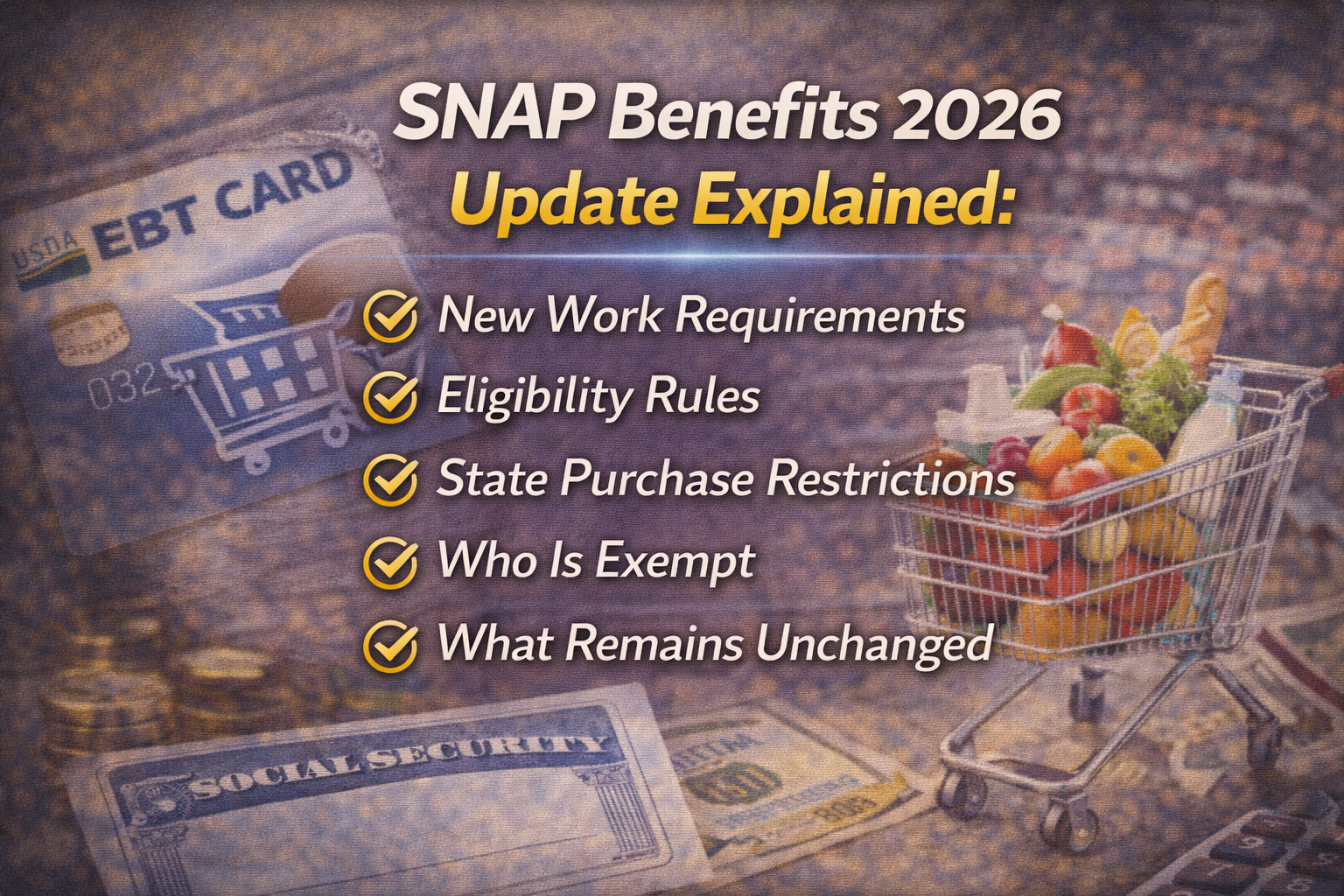
As SNAP (Supplemental Nutrition Assistance Program) enters 2026, millions of low-income households across the United States are facing some of the biggest policy changes in years. Beneficiaries, advocates, and the public are asking: What is actually changing? and What remains the same? This article breaks down the official updates for 2026, how eligibility rules are shifting, and what aspects of the program are unchanged or stable — based on current USDA guidance and state implementation.
What SNAP Is and Who It Helps
SNAP is a federally funded nutrition assistance program administered by the U.S. Department of Agriculture (USDA) Food and Nutrition Service (FNS). Its core mission is to provide eligible low-income households with monthly benefits that can be used to buy food at authorized retailers and farmers markets. SNAP eligibility and benefit levels are based on household size, income, allowable expenses (like rent and utilities), assets, and immigration status.
As of 2026, approximately 42 million Americans rely on SNAP to help pay for groceries and reduce food insecurity.
Major 2026 Changes to SNAP: Work Requirements Expanded
New Work Requirement Rules (Effective Feb. 1, 2026)
One of the most significant changes this year is the expansion of work requirements for most SNAP recipients. Under federal law passed in 2025, the age range for work rules now generally covers able-bodied adults without dependents (ABAWDs) aged 18 to 64. Previously, work requirements largely applied only to adults up to age 54.
Under the new rule:
- Beneficiaries in this group must work, volunteer, train, or participate in SNAP Employment & Training programs for at least 80 hours per month to continue receiving benefits after an initial limited eligibility period.
- This is equivalent to about 20 hours per week of eligible activity.
- Exemptions may still apply but are now narrower, with caregiving exemptions limited to those responsible for children under 14 and certain disability/health exemptions remaining.
Why it matters: Millions of SNAP recipients could see their benefits reduced or terminated if they do not meet these documentation or activity requirements. Estimates suggest the expanded work rules could reduce SNAP participation over time.
Other 2026 SNAP Policy Updates
Purchase Restrictions in Some States
Several states have received USDA waivers allowing them to restrict the types of food that can be purchased with SNAP benefits beginning in 2026. These waivers aim to limit the purchase of items like soda, candy, and other high-sugar products in participating states.
- Examples include Idaho, Utah, Indiana, Iowa, Arkansas and others with waivers effective from January 1 or later in 2026.
- These restrictions vary by state and are not nationwide; states without waivers still allow SNAP benefits to buy all standard eligible foods.
Changes to Eligibility for Some Noncitizens
A federal policy change in 2025 narrowed immigrant eligibility for SNAP. Certain humanitarian groups — such as refugees, asylees, and some trafficking survivors — are no longer automatically eligible unless other qualifying conditions are met.
Administrative Cost Shifts for States (Later 2026)
Beginning in October 2026, states will begin shouldering a larger share of administrative costs for SNAP, rising from 50% to 75% of administrative expenses. This change could affect how state agencies manage SNAP operations and work verification in the future.
What Has Not Changed in 2026
Despite major work and state-specific updates, several core aspects of SNAP remain consistent:
SNAP Still Provides Food Assistance
The basic structure — monthly benefits that help eligible low-income households buy food — continues in 2026. Households still use Electronic Benefit Transfer (EBT) cards at authorized retailers.
Continuation of Federal Benefit Calculations
Benefit levels are still determined based on federal income and expense rules, which include standard deductions and utility allowances. The USDA continues to adjust maximum benefits annually based on cost-of-living changes in the national Thrifty Food Plan.
Geographic Admin by State Agencies
SNAP eligibility and recertification continue to be managed by state and local agencies under federal guidelines. While rules like work requirements and purchase waivers may differ by state, the overall program structure is federally supported and locally administered.
Who Is Still Exempt or Protected?
Even with 2026 changes, certain groups are exempt from the expanded SNAP work requirements:
- Individuals under 18 or over 64
- People with documented physical or mental conditions that limit work
- Pregnant individuals
- Some caregivers with young children (typically under 14 depending on state rules)
Older adults, persons with disabilities, and families with dependent children still qualify under existing income and resource tests, even if work requirements apply to others.
What SNAP Recipients Should Do Now
To avoid benefit interruption or loss:
- Know Your Work Requirements: Understand what documentation your state requires to prove work, training, or volunteer hours.
- Keep Your Contact Info Updated: Make sure your address and email are current with your SNAP office so you receive notices about recertification or new rules.
- Track Reporting Deadlines: Work requirement period counts and recertification windows are essential to remain eligible.
- Check State-Specific Rules: Some states implement additional waivers or restrictions (like purchase limits), so confirm how SNAP rules apply in your area.
Final Verdict: SNAP in 2026
2026 is a transitional year for SNAP, marked by expanded work requirements, evolving immigrant eligibility rules, and state-level food purchase restrictions, all rooted in federal law changes enacted in 2025. However, the program’s core mission of providing food assistance to eligible low-income households remains intact. Beneficiaries should stay informed about work requirement documentation, state waivers, and any notifications from their local SNAP office to ensure continued access to benefits.
FAQs – SNAP Benefits 2026
Will SNAP benefits be completely eliminated in 2026?
No. SNAP continues to operate, but with updated eligibility and work rules.
Do all states enforce the same SNAP food purchase restrictions?
No — food restrictions depend on whether the state has an approved USDA waiver.
Are senior citizens affected by the new work requirements?
Generally no — work requirements target able-bodied adults aged 18–64.
Do income limits change nationwide in 2026?
Federal income limits are regularly adjusted but not radically changed this year; state specifics may vary.