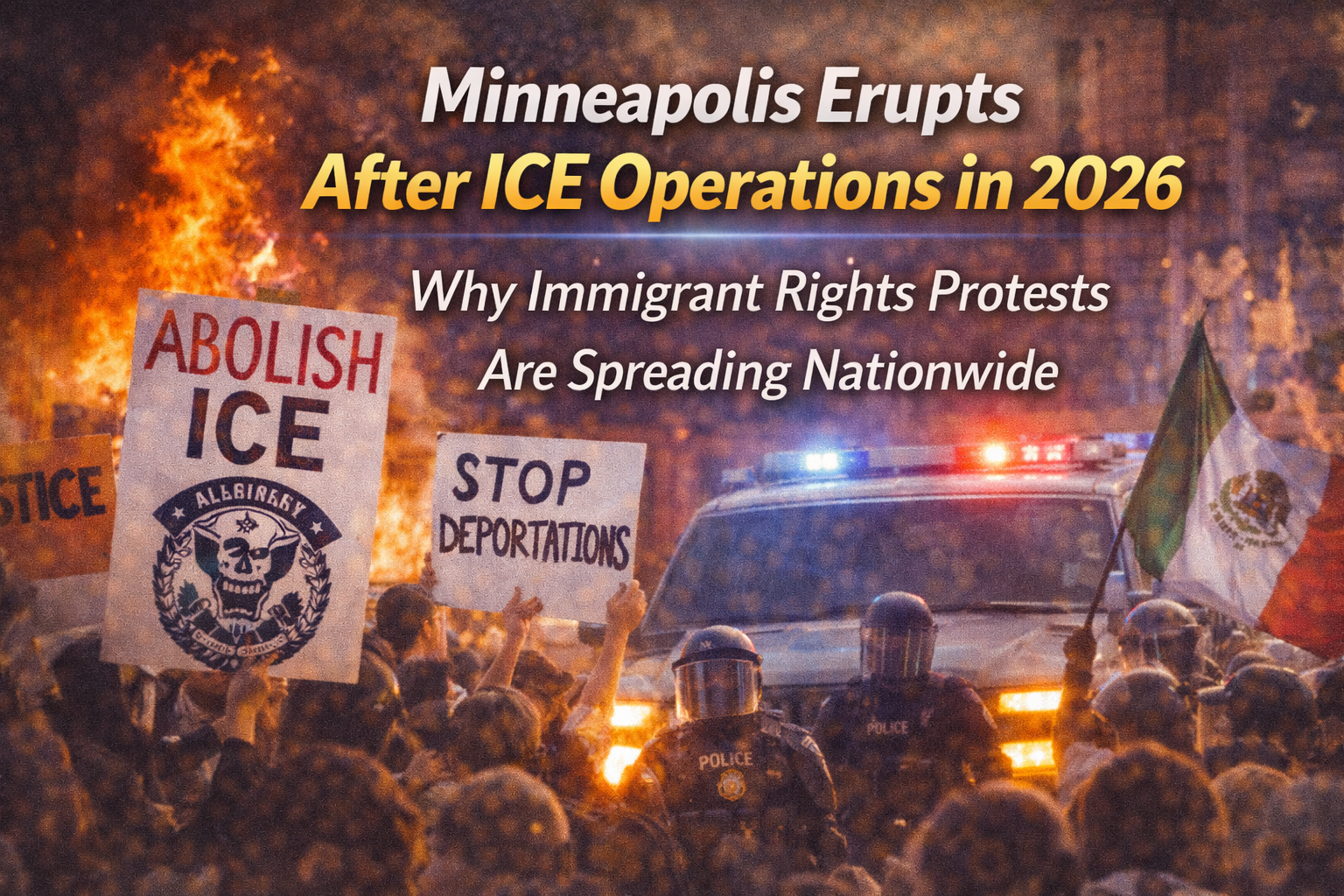
Minneapolis has become the center of national attention in early 2026, following a wave of large-scale immigrant rights protests triggered by intensified ICE (Immigration and Customs Enforcement) operations across the city. What began as localized demonstrations has now grown into a broader movement, drawing attention to immigration enforcement practices, civil liberties, and the response of local communities.
As protests continue to expand, many Americans are asking: What exactly happened in Minneapolis, why are citizens protesting, and what does this mean going forward?
This article explains the situation clearly, without speculation—covering the events that sparked the protests, public response, legal concerns, and national implications.
What Triggered the Minneapolis Protests in 2026?
The unrest began after a series of ICE enforcement actions carried out in Minneapolis neighborhoods in early 2026. These operations reportedly involved:
- Increased federal agent presence
- Arrests during early-morning operations
- Enforcement actions in residential areas
According to public officials, the operations were part of a broader federal immigration initiative. However, community leaders and residents raised concerns over transparency, safety, and the impact on families, including U.S. citizens and lawful residents.
Tensions escalated further after reports of civilian harm during enforcement activity, prompting widespread public concern and calls for accountability.
Why Citizens Took to the Streets
The protests are not limited to undocumented immigration concerns alone. Demonstrators cite a combination of issues, including:
- Fear within immigrant and mixed-status families
- Concerns about civil rights and due process
- Lack of coordination with local authorities
- Impact on public trust and community safety
Thousands of residents—including students, faith leaders, labor groups, healthcare workers, and longtime Minneapolis citizens—have participated in peaceful marches demanding policy review and oversight.
Many protest signs and speeches emphasize that the issue affects entire communities, not only immigrants.
Scale of the Protests and National Attention
What makes the Minneapolis protests stand out is their scale and rapid spread.
- Large demonstrations have taken place in downtown Minneapolis
- Solidarity protests have appeared in other U.S. cities
- Advocacy groups have organized coordinated national actions
Public figures, artists, and civil rights organizations have also spoken out, amplifying the situation beyond Minnesota and pushing it into the national conversation.
Community Impact: Fear, Resistance, and Support Networks
Beyond protests, the ICE operations have had real-world consequences for daily life in affected neighborhoods.
Community Concerns
Reports indicate that some residents have:
- Avoided public spaces
- Skipped medical appointments
- Pulled children out of school temporarily
These reactions stem from fear of enforcement encounters—even among those with legal status.
Grassroots Response
In response, local organizations have mobilized to:
- Provide legal awareness sessions
- Distribute “know your rights” information
- Offer community support hotlines
These efforts aim to reduce panic and ensure residents understand their legal protections.
Political and Legal Reactions
State and local officials have voiced strong concerns about the scope of federal enforcement in Minneapolis.
Key developments include:
- Calls for independent investigations
- Public statements from state leadership questioning enforcement methods
- Legal challenges focused on constitutional rights
While federal agencies maintain their authority to enforce immigration law, critics argue that oversight and safeguards are necessary to prevent harm to civilians.
Are These Protests Changing Immigration Policy?
At this stage, no immediate federal policy changes have been announced directly as a result of the Minneapolis protests.
However, historically, sustained public pressure has influenced:
- Congressional hearings
- Agency reviews
- Court scrutiny of enforcement practices
Policy experts note that 2026 may become a turning point in public debate over how immigration laws are enforced at the local level.
What Happens Next?
The situation remains fluid.
Possible next steps include:
- Continued protests and legal actions
- Federal and state negotiations
- Court rulings that clarify enforcement limits
What is clear is that Minneapolis has become a symbolic flashpoint in a much larger national discussion about immigration, civil liberties, and public trust.
Final Verdict: Why Minneapolis Matters in 2026
The immigrant rights protests in Minneapolis are about more than a single enforcement operation.
They reflect:
- Growing public scrutiny of ICE actions
- Deep concerns about community safety
- A broader national reckoning with immigration enforcement practices
As 2026 unfolds, the outcomes in Minneapolis may influence how similar situations are handled across the United States.
FAQs – Minneapolis ICE Protests 2026
Why are people protesting ICE in Minneapolis?
Protests followed intensified ICE operations and concerns about civilian impact and civil rights.
Are these protests legal?
Yes, demonstrations have largely been peaceful and protected under the First Amendment.
Is this affecting only undocumented immigrants?
No, mixed-status families and U.S. citizens have also reported fear and disruption.
Has the government responded?
State officials have criticized the operations; legal reviews are ongoing.