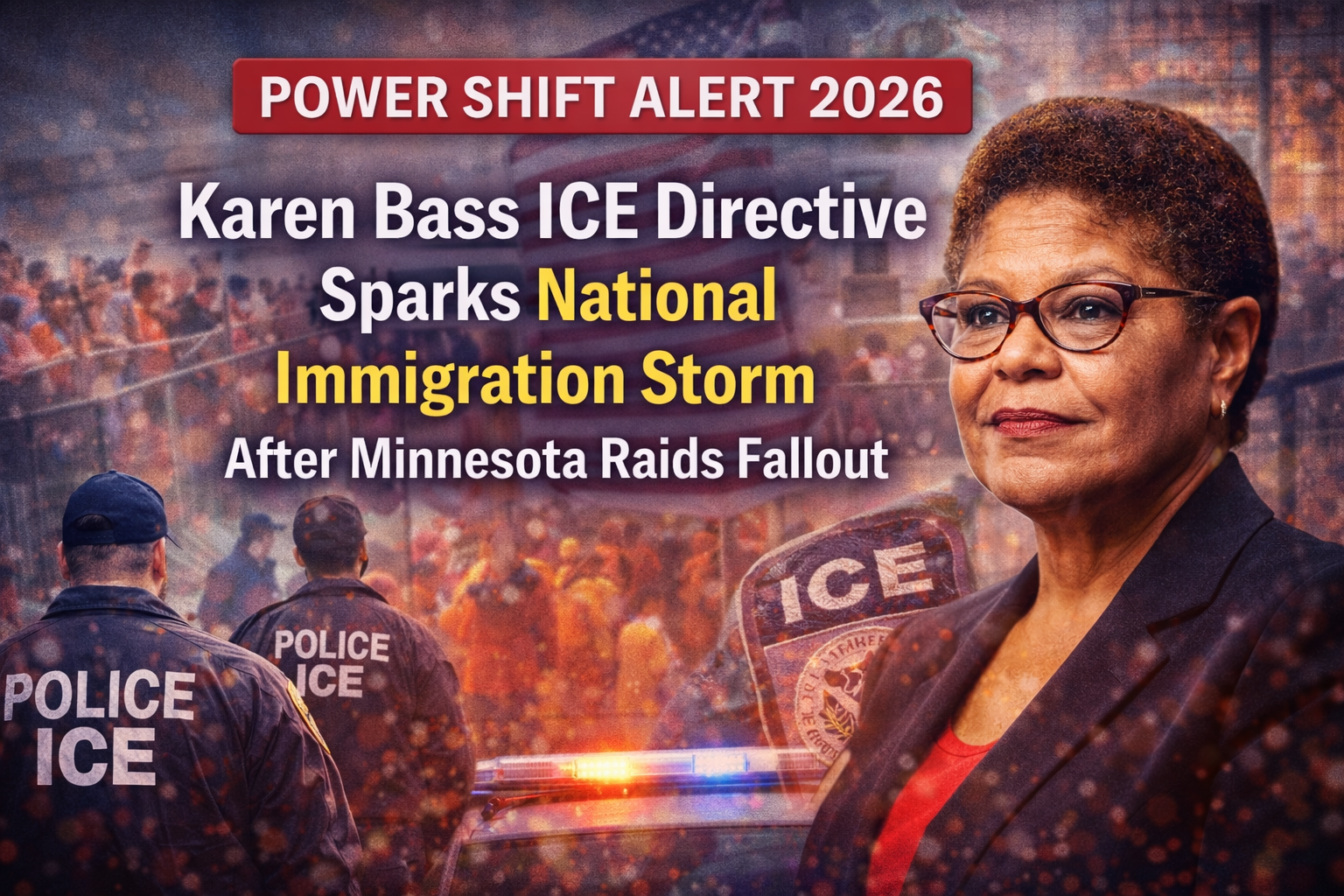
In 2026 the immigration debate in the United States has intensified dramatically after Los Angeles Mayor Karen Bass issued a strong directive regarding federal immigration enforcement operations. The move came amid rising tensions linked to ICE raids in Minnesota that triggered protests political disputes and legal questions across the country. This situation has quickly evolved into a national policy battle involving federal authority sanctuary city rights and public safety concerns.
This article explains what the Karen Bass ICE directive means why it matters for sanctuary city policies and how the Minnesota raids fallout is reshaping immigration enforcement debates in America. Readers will understand the legal implications political reactions nationwide risks for federal local cooperation and what changes could happen next in US immigration enforcement strategy.
Key Highlights
| Topic | Key Details |
| Directive Focus Limits | cooperation between local agencies and federal ICE enforcement |
| Main Trigger Minnesota | immigration raids and rising federal operations |
| Legal Conflict Federal | authority versus sanctuary city autonomy |
| Political Impact National | debate between state and federal governments |
| Public Reaction Protests | policy criticism and legal challenges nationwide |
| Future Risk Potential | federal lawsuits funding disputes and policy reforms |
What Is Karen Bass ICE Directive and Why It Matters in 2026
The Karen Bass ICE directive refers to updated guidance issued by the Los Angeles mayor that restricts how city departments cooperate with federal immigration enforcement agencies. The directive reinforces Los Angeles status as a sanctuary city and aims to protect undocumented residents from local law enforcement involvement in deportation operations.
This directive matters in 2026 because it represents a broader shift in how large US cities are responding to aggressive federal immigration enforcement actions. It highlights a growing divide between federal immigration authority and local government autonomy. The policy also influences national immigration enforcement strategies because Los Angeles is one of the largest cities in the country and often sets precedents for other sanctuary jurisdictions.
How Minnesota ICE Raids Triggered National Fallout
The Minnesota ICE raids in early 2026 became a turning point in the immigration debate. Federal agents conducted large scale operations resulting in multiple detentions which sparked protests community fears and political backlash. Local leaders criticized the raids arguing they created panic and damaged trust between immigrant communities and law enforcement.
The fallout from these operations spread nationwide because they raised concerns about federal enforcement tactics. Many city leaders including Karen Bass viewed the raids as evidence of increased federal pressure on sanctuary jurisdictions. This triggered policy responses across multiple states reinforcing sanctuary protections and increasing legal tensions between local governments and federal immigration authorities.
Legal Challenges Surrounding Sanctuary City Policies
Sanctuary city policies have long faced legal challenges regarding whether local governments can limit cooperation with federal immigration enforcement. The Karen Bass directive has revived these debates because federal officials argue that local restrictions interfere with national immigration law enforcement.
However courts have often ruled that federal authorities cannot force local governments to actively assist immigration enforcement. This creates a complex legal balance between federal supremacy in immigration policy and local rights to control policing priorities. The 2026 directive could lead to new lawsuits that may eventually reach higher courts to clarify the limits of federal and local authority.
Political Reactions Across the United States
The political response to the Karen Bass directive has been sharply divided along ideological lines. Supporters argue the policy protects immigrant communities prevents fear driven crime underreporting and strengthens local policing independence. Many progressive leaders see it as necessary to safeguard civil rights.
Critics including federal immigration officials argue sanctuary policies obstruct national law enforcement and allow undocumented immigrants to avoid deportation. Some lawmakers have proposed federal penalties for sanctuary cities including funding restrictions. This political divide reflects broader national disagreements over immigration reform border security and federal state power balance.
How the Directive Could Shape Future Immigration Enforcement
The Karen Bass ICE directive may influence future immigration enforcement strategies nationwide. If more cities adopt similar policies federal authorities may rely more heavily on independent operations rather than local cooperation. This could increase operational costs and tensions between governments.
Additionally the directive could spark legislative changes at both federal and state levels. Lawmakers may introduce new regulations clarifying sanctuary city authority funding conditions and enforcement cooperation requirements. The long term impact may reshape how immigration enforcement is carried out across the United States especially in major urban areas.
How Sanctuary City Directives Affect Local Communities
Sanctuary policies like the Bass directive can significantly impact local communities particularly immigrant populations. Supporters believe such policies encourage undocumented residents to report crimes cooperate with police and access public services without fear of deportation.
However critics argue these policies may complicate coordination between local law enforcement and federal agencies. This can create operational challenges during criminal investigations involving immigration violations. Despite differing opinions these directives remain central to the broader debate over public safety civil rights and federal authority.
Conclusion
The Karen Bass ICE directive represents a major development in the ongoing US immigration policy conflict. It highlights the tension between federal enforcement power and local sanctuary city autonomy especially following the Minnesota ICE raids fallout.
As legal challenges political debates and community reactions continue this issue is likely to shape immigration enforcement policies in the coming years. Future court decisions legislative reforms and federal local negotiations will determine how much authority sanctuary cities can maintain over immigration cooperation policies.
FAQs
What is the Karen Bass ICE directive?
The directive limits how Los Angeles city departments cooperate with federal immigration enforcement agencies while reinforcing sanctuary city protections.
Why did the Minnesota ICE raids cause national controversy?
The raids triggered protests and political backlash because they involved large scale detentions and raised concerns about federal enforcement tactics.
Can sanctuary cities legally refuse cooperation with ICE?
Courts generally allow local governments to limit cooperation but federal authorities still retain full power to enforce immigration laws independently.
Will the directive lead to legal challenges?
Yes federal officials may challenge the policy in court leading to further legal clarification on sanctuary city authority.
How could this impact future US immigration policies?
The directive may influence nationwide sanctuary policies federal enforcement strategies and potential legislative reforms.